Įvadas
This manual provides instructions for the installation, operation, maintenance, and troubleshooting of the EDUP EP-N1528 300Mbps Wireless USB Adapter. This device is designed to provide high-speed wireless internet access to any USB-compatible computer, utilizing 802.11n/g/b wireless standards.
Sąranka
1. Pakuotės turinys
- EDUP EP-N1528 Wireless USB Adapter
- Driver CD (may vary by package)
- Vartotojo vadovas (šis dokumentas)
2. Tvarkyklės diegimas
Before connecting the adapter to your computer, it is recommended to install the necessary drivers. Insert the provided driver CD into your computer's CD-ROM drive and follow the on-screen instructions. If a CD is not provided or your computer lacks a CD-ROM drive, download the latest drivers from the official EDUP support websvetainę.
3. Fizinis ryšys
Once the drivers are installed, or if your operating system supports plug-and-play for this device, proceed with the physical connection:
- Raskite laisvą USB 2.0 prievadą savo kompiuteryje.
- Carefully insert the EDUP EP-N1528 Wireless USB Adapter into the USB port. Ensure it is fully seated.
- The operating system should detect the new hardware and complete the installation process. A notification may appear indicating that the device is ready for use.
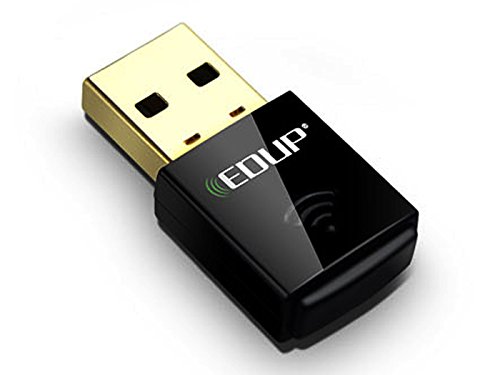
Image of the EDUP EP-N1528 Wireless USB Adapter, showing its compact design and USB connector.
Veikiantis
1. Prisijungimas prie belaidžio tinklo
Sėkmingai įdiegus, galite prisijungti prie belaidžio tinklo:
- Locate the wireless network icon in your computer's system tray (usually in the bottom-right corner for Windows, or top-right for macOS/Linux).
- Spustelėkite piktogramą, kad view galimų belaidžių tinklų.
- Iš sąrašo pasirinkite norimą tinklą (SSID).
- Jei būsite paraginti, įveskite tinklo saugos raktą (slaptažodį) ir spustelėkite „Prisijungti“.
- Once connected, the icon will indicate a successful connection, and you can access the internet.
2. Supported Modes
The EDUP EP-N1528 adapter supports both Ad Hoc ir Infrastruktūra modes. Infrastructure mode is used for connecting to a wireless router or access point, while Ad Hoc mode allows direct communication between wireless devices without a central access point.
3. WiFi Protected Setup (WPS)
The adapter supports WPS for simplified and secure wireless network setup. If your router also supports WPS, you can establish a secure connection by pressing the WPS button on both the adapter (if available, or through software utility) and the router.
Priežiūra
1. Tvarkyklių atnaujinimai
Periodiškai tikrinkite EDUP pareigūną website for updated drivers. Keeping your drivers current can improve performance, stability, and security.
2. Bendroji priežiūra
- Adapterį laikykite švarų ir be dulkių. Valymui naudokite minkštą, sausą šluostę.
- Saugokite adapterį nuo ekstremalių temperatūrų, drėgmės ar tiesioginių saulės spindulių.
- Do not attempt to disassemble or modify the adapter, as this will void the warranty.
Trikčių šalinimas
1. Nėra belaidžio ryšio
- Patikrinkite fizinį ryšį: Įsitikinkite, kad adapteris tvirtai prijungtas prie USB prievado. Išbandykite kitą USB prievadą.
- Tvarkyklės diegimas: Verify that the drivers are correctly installed. Check Device Manager (Windows) or System Information (macOS/Linux) to see if the adapter is recognized without errors. Reinstall drivers if necessary.
- Wireless Network Availability: Ensure your wireless router is powered on and broadcasting a signal. Check if other devices can connect to the network.
- Tinklo nustatymai: Confirm that your network name (SSID) and password are correct.
2. Lėtas ryšio greitis
- Signalo stiprumas: Move closer to your wireless router or access point to improve signal strength. Obstacles like walls and furniture can degrade signal quality.
- Trikdžiai: Other electronic devices (e.g., microwaves, cordless phones) operating on the 2.4 GHz band can cause interference. Try changing your router's Wi-Fi channel.
- Tvarkyklės atnaujinimai: Įsitikinkite, kad įdiegėte naujausias tvarkykles.
- Tinklo perkrova: If many devices are using the network simultaneously, speed may decrease.
3. Adapteris neatpažintas
- Iš naujo paleiskite kompiuterį: Paprastas paleidimas iš naujo dažnai gali išspręsti atpažinimo problemas.
- USB prievadas: Test the adapter in a different USB port. Ensure the USB port is functional.
- Tvarkyklės diegimas iš naujo: Uninstall existing drivers and perform a clean reinstallation.
Specifikacijos
| Prekės ženklas | EDUP |
| Modelis | EP-N1528 |
| Duomenų perdavimo sparta | Iki 300 Mbps |
| Belaidžio ryšio standartai | IEEE 802.11n, 802.11g, 802.11b, 802.11e |
| Sąsaja | USB 2.0 (backward compatible with USB 1.1, 1.2) |
| Dažnių juosta | 2.400 GHz ISM |
| Moduliavimo metodas | QPSK / BPSK / 16-QAM / 64-QAM |
| Belaidis saugumas | 64-bit/128-bit WEP, TKIP, AES, WPA, WPS |
| Veikimo atstumas | Up to 91.4m (indoors), Up to 274.3m (open space) |
| Operacinės sistemos palaikymas | Windows 2000, XP, Vista, Linux, Mac OS X |
| Suderinami įrenginiai | Kompiuteris |
Garantija ir palaikymas
For warranty information and technical support, please refer to the documentation included with your purchase or visit the official EDUP websvetainėje. Išsaugokite pirkimo įrodymą garantiniams reikalavimams.


