1. Įvadas
This instruction manual provides essential information for the safe and effective use of the UNI-T UPO1102 100MHz 2-Channel Digital Oscilloscope. The UPO1102 is a versatile instrument designed for electronic and electrical measurements, featuring a 100MHz bandwidth, 1 GSa/s real-time sample rate, 56 Mpts memory depth, and a 7-inch display. It incorporates Ultra Phosphor technology for enhanced waveform display and analysis capabilities.
Please read this manual thoroughly before operating the device to ensure proper functionality and to prevent damage.
2. Saugos informacija
Always observe the following safety precautions to avoid personal injury and prevent damage to the instrument or other connected devices.
- Prijunkite maitinimo laidą prie tinkamai įžeminto lizdo.
- Nenaudokite osciloskopo drėgnoje ar sausoje vietoje.amp sąlygas.
- Užtikrinkite tinkamą vėdinimą, kad išvengtumėte perkaitimo.
- Neatidarykite instrumento c.asing; techninę priežiūrą patikėkite kvalifikuotiems darbuotojams.
- Naudokite tik nurodytus zondus ir priedus.
- Observe all terminal ratings to prevent fire or shock hazard.
3. Produktas baigtasview
3.1 Priekinis skydelis
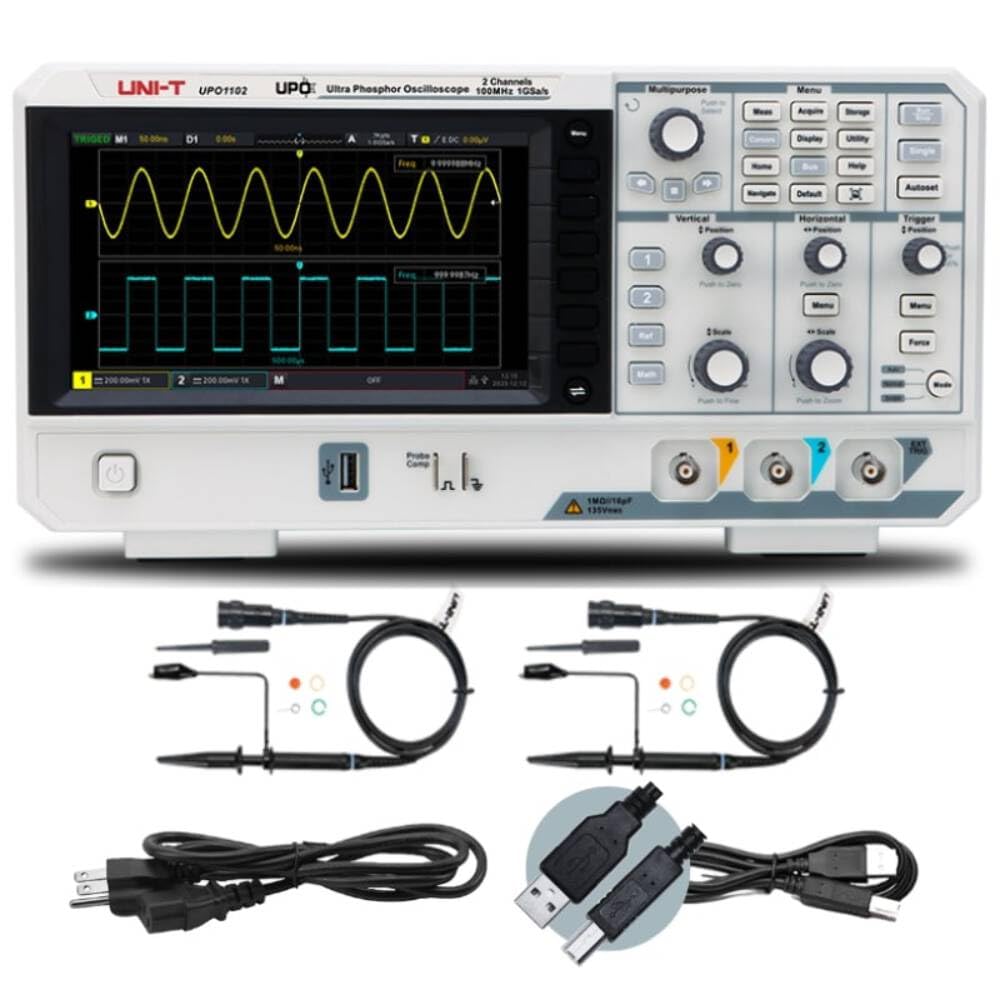
Figure 3.1: Front Panel of UPO1102 Oscilloscope
The front panel features the main display, various control knobs and buttons for waveform adjustment, trigger settings, and menu navigation. Input channels CH1 and CH2 are located at the bottom right.
3.2 Galinis skydelis
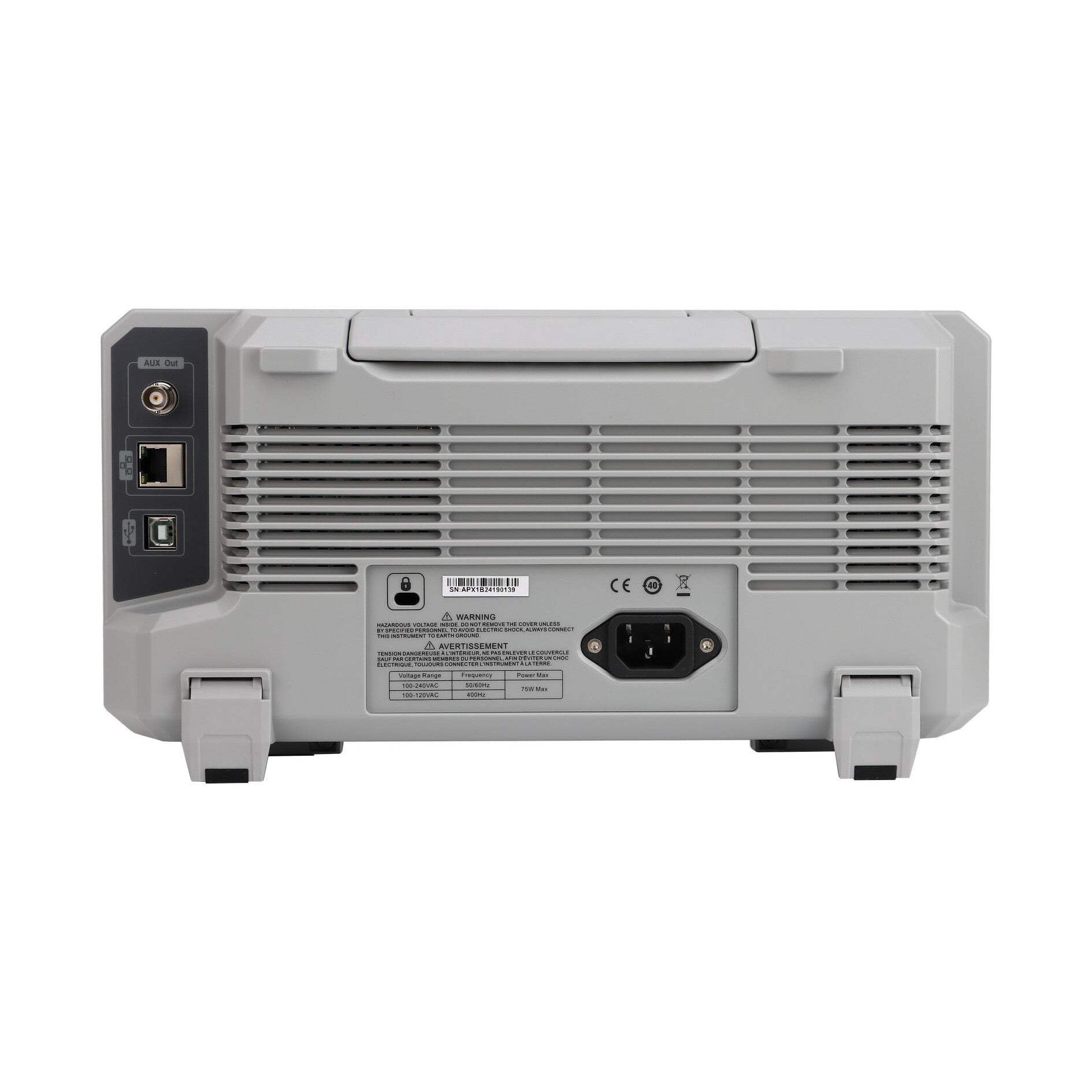
Figure 3.2: Rear Panel of UPO1102 Oscilloscope
The rear panel includes the AC power input, USB ports for data transfer and printing, and ventilation grilles to ensure proper cooling during operation.
3.3 Matmenys
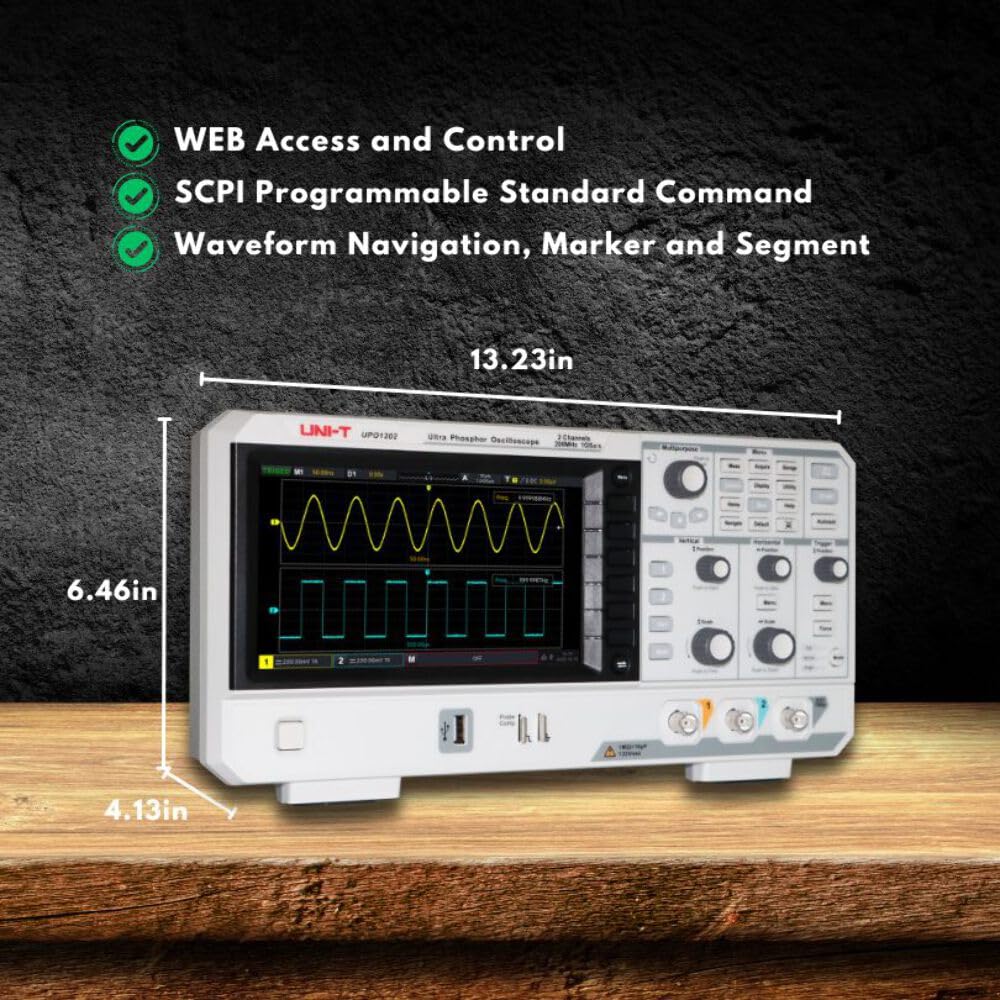
Figure 3.3: UPO1102 Oscilloscope Dimensions
The physical dimensions of the UPO1102 are approximately 13.23 inches (width) x 6.46 inches (height) x 4.13 inches (depth).
4. Sąranka
4.1 Išpakavimas ir patikrinimas
Upon receiving your UPO1102 oscilloscope, carefully unpack all components and inspect them for any signs of damage. Retain the packaging for future transport or storage.
Standartiniai priedai:
- Oscilloscope Probe (UT-P04) x 2
- Maitinimo laidas
- USB2.0 Printing Cable
- English Download Guide
- Multi-language Safety Manual
- Kalibravimo ataskaita (COC)
4.2 Maitinimo jungtis
- Įsitikinkite, kad osciloskopas pastatytas ant stabilaus, lygaus paviršiaus su tinkama ventiliacija.
- Prijunkite pateiktą maitinimo laidą prie kintamosios srovės maitinimo įvesties, esančios osciloskopo galiniame skydelyje.
- Kitą maitinimo laido galą prijunkite prie įžeminto kintamosios srovės lizdo.
- Norėdami įjungti osciloskopą, paspauskite priekiniame skydelyje esantį maitinimo mygtuką.
4.3 Zondo prijungimas ir kompensavimas
Before taking measurements, it is crucial to compensate the probes to ensure accurate readings.
- Connect a probe to one of the input channels (CH1 or CH2) on the front panel.
- Connect the probe tip to the "Probe Comp" terminal and the ground clip to the ground terminal next to it.
- Paspauskite Auto button. The oscilloscope will automatically adjust the settings to display the compensation signal.
- Observe the square wave displayed on the screen. If the waveform is not a perfect square (over-compensated or under-compensated), adjust the trimmer on the probe body using a non-metallic tool until a flat-top square wave is achieved.
- Repeat for the second probe if using both channels.

Figure 4.1: Probe Compensation Waveform
A correctly compensated probe displays a clean square wave. Adjust the probe's trimmer if the waveform shows overshoot or undershoot.
5. Naudojimo instrukcijos
5.1 Pagrindiniai valdikliai
- Maitinimo mygtukas: Located on the front panel, used to turn the device on or off.
- Daugiafunkcinė rankenėlė: Used for menu navigation and parameter adjustment. Press to confirm selections.
- Vertical Controls (CH1, CH2): Adjust vertical position and scale (volts/division) for each channel. "Push to Zero" resets position, "Push to Fine" enables fine adjustment.
- Horizontalūs valdikliai: Adjust horizontal position and time base (seconds/division). "Push to Zero" resets position, "Push to Zoom" enables horizontal zoom.
- Trigerio valdikliai: Set the trigger level, mode (Auto, Normal, Single), and force a trigger event.
- Automatinis mygtukas: Automatically adjusts vertical, horizontal, and trigger settings to display a stable waveform.
- Mygtukas „Vykdyti / sustabdyti“: Pradeda arba sustabdo bangos formos gavimą.
5.2 Bangos formos gavimas ir rodymas
The UPO1102 features a 7-inch display and Ultra Phosphor technology for clear waveform visualization, even with complex signals.

Figure 5.1: Ultra Phosphor Display
Ultra Phosphor technology provides a gradient display, where brighter areas indicate more frequent occurrences of the waveform, helping to visualize signal anomalies and variations.

Figure 5.2: Multi-Channel Waveform Display
The UPO1102 can display and analyze two channels simultaneously, allowing for comparison of different signals.
5.3 Matavimo funkcijos
- Žymeklio matavimas: Activate the "Cursor" function to measure time and voltage parameters within a specified area on CH1, CH2, MATH, or REF waveforms.
- FFT analizė: The UPO1102 features 1Mpts FFT sampling points, enabling frequency domain analysis. Access the FFT function to set frequency range, detection mode, and spectrum marking.
- Navigation Functions: Utilize time navigation, marker navigation, and segment navigation for detailed waveform inspection.

Figure 5.3: FFT Spectrum Analysis
The FFT function transforms time-domain signals into the frequency domain, useful for analyzing harmonic content and noise.
5.4 Digital Decoding
The innovative hardware decoding feature allows for real-time decoding of serial bus protocols. With a deep storage of 56 Mpts, decoding speed is maintained at millisecond levels, preventing delays when viewing decoded data. This function does not affect the waveform refresh rate, maintaining the digital fluorescence display effect.

Figure 5.4: Digital Decoding Example
The decoding feature displays protocol information directly on the screen, simplifying debugging of serial communications.
5.5 Data Storage and Connectivity
- Atminties gylis: The UPO1102 offers a 56 Mpts memory depth, allowing for capture of long signal durations at high sample tarifus.
- USB jungtis: Use the provided USB2.0 printing cable to connect the oscilloscope to a computer for data transfer or direct printing.
- Web Access and Control: Prietaisas palaiko WEB access and control, along with SCPI (Standard Commands for Programmable Instruments) for remote operation and automation.

Figure 5.5: Memory Depth Indication
A large memory depth is crucial for capturing transient events or long sequences of data without losing detail.
6. Priežiūra
6.1 Bendroji priežiūra
- Keep the instrument clean and dry. Avoid operating in dusty or humid environments.
- Protect the display from scratches and impacts.
- Do not block the ventilation openings on the rear panel.
6.2 Valymas
To clean the exterior of the oscilloscope:
- Disconnect the power cord and all probes/cables.
- Naudokite minkštą skudurėlį dampened with mild detergent and water. Do not use abrasive cleaners or solvents.
- For the display, use a soft, lint-free cloth specifically designed for electronic screens.
- Ensure the instrument is completely dry before reconnecting power.
7. Problemų sprendimas
This section addresses common issues you might encounter with the UPO1102 oscilloscope. For problems not listed here, contact UNI-T customer support.
| Problema | Galima priežastis | Sprendimas |
|---|---|---|
| Po įjungimo ekrano nėra. | Power cord not connected, power outlet faulty, instrument fault. | Patikrinkite maitinimo laido jungtį. Patikrinkite maitinimo lizdą. Jei problema išlieka, kreipkitės į palaikymo tarnybą. |
| Nerodoma bangos forma. | Probe not connected, signal too small/large, trigger not set correctly, channel off. | Ensure probe is connected to signal source. Press Auto button. Adjust vertical scale (Volts/Div) and horizontal scale (Sec/Div). Check trigger level. Ensure channel is enabled. |
| Nestabili bangos forma. | Trigger level incorrect, trigger mode unsuitable, signal noise. | Adjust trigger level. Try different trigger modes (e.g., Normal or Single). Reduce noise in the signal path. |
| Incorrect measurements. | Probe compensation incorrect, probe attenuation setting wrong, measurement settings incorrect. | Perform probe compensation (Section 4.3). Verify probe attenuation setting matches physical probe (e.g., 1X, 10X). Check measurement parameters. |
8. Specifikacijos
| Parametras | Vertė |
|---|---|
| Pralaidumas | 100 MHz |
| Kanalai | 2 |
| Realiu laiku Sample Įvertinkite | 1 GSa/s |
| Atminties gylis | 56 Mpts |
| Bangos formos fiksavimo greitis | 10 000 wfm/s |
| Ekranas | 7 colių |
| FFT Sampling Taškai | 1 Mpts |
| Gaminio matmenys | 13 x 4 x 6 colio (apytiksliai 330 x 102 x 152 mm) |
| Prekės svoris | 8.13 svaro (apie 3.69 kg) |
| Gamintojas | UNI-T |
| ASIN | B0D7F2D9MS |
| Pasiekiama pirmoji data | 19 m. birželio 2024 d |
9. Garantija ir palaikymas
For warranty information, technical support, or service inquiries regarding your UNI-T UPO1102 oscilloscope, please refer to the official UNI-T websvetainėje arba susisiekite su klientų aptarnavimo skyriumi.
UNI-T Official Store: Apsilankykite UNI-T parduotuvėje „Amazon“ svetainėje
Please have your product model (UPO1102) and ASIN (B0D7F2D9MS) available when contacting support.